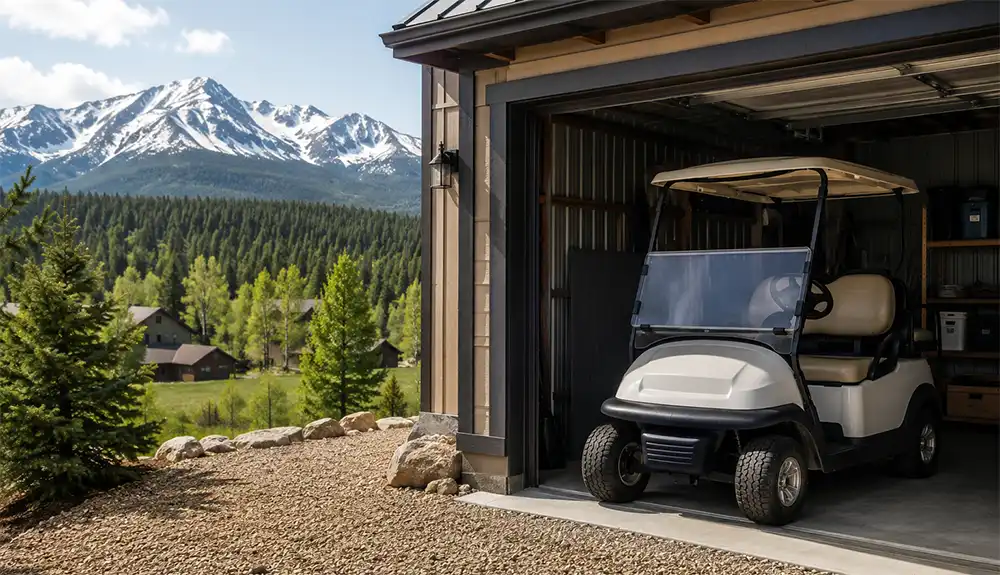
Colorado gets about 300 days of sunshine a year. But those winter months still bring real cold, and if you store your golf cart without preparing it properly, you will likely be dealing with a dead battery, a drained fuel system, or cracked plastic when you pull it back out.
We see this at 303 Cart Barn every spring. Customers come in wondering why their cart will not start or why the battery pack died over the winter. In almost every case, the problem was preventable.
This guide will walk you through exactly what to do before you put your cart away for the season.
Why Colorado Storage Conditions Are Unique
Colorado is not the Pacific Northwest. The cold here is real but the bigger issue is the altitude and the dryness.
Low humidity actually helps in some ways. You are less likely to deal with moisture damage and corrosion compared to someone storing a cart in a coastal climate. But the dry air and big temperature swings from day to night can crack rubber seals, stress battery terminals, and cause plastic components to become brittle faster than they would in milder climates.
If you are storing your cart unheated, which most people are, you need to account for temperatures that can drop well below freezing for weeks at a time along the Front Range. In the foothills, it gets colder still.
The good news is that a little preparation goes a long way.
Step One: Give the Cart a Thorough Cleaning
Before anything else, wash the cart. Remove dirt, grass clippings, mud, and debris from the body, undercarriage, and wheels. Debris left on the cart over a long winter can trap moisture against metal parts and accelerate rust.
Pay attention to the underside of the cart. Areas around the wheel wells and frame rails are common spots for dirt to accumulate. A garden hose works fine. Let the cart dry completely before moving on to the next steps.
Once it is clean, inspect the body panels for any cracks or chips. If you find paint chips that expose metal, touch them up before storage. A little rust treatment now is far cheaper than a full repair in May.
Step Two: Prep the Batteries (Electric Carts)
Battery care is the single most important part of winter storage for electric carts. Getting this wrong is the most common reason carts need expensive repairs after winter.
For lead acid batteries:
Fully charge the battery pack before storage. Do not put a discharged battery pack into storage. Discharged lead acid batteries can sulfate over the winter, which permanently reduces capacity and can destroy the batteries entirely.
After charging, check the water level in each battery cell. Only use distilled water. Tap water contains minerals that degrade battery plates over time. Fill each cell to just above the plates. Do not overfill.
Clean the battery terminals and apply a thin coat of terminal protector spray or petroleum jelly. This prevents corrosion from forming during the months the cart sits.
If your storage period is longer than 30 days, you need a way to keep the batteries topped off. Batteries self discharge slowly even when not in use. A battery maintainer, sometimes called a trickle charger, provides a slow, steady charge that keeps the pack healthy without overcharging it. Set it and leave it for the winter.
For lithium batteries:
Lithium packs are much easier to store. They have very low self discharge rates and do not need the same level of attention.
Store a lithium pack at around 50 to 80 percent charge. A fully charged lithium battery held at 100 percent for months is not ideal for long term cell health. Most modern lithium battery management systems handle this automatically, but it is worth checking with your battery manufacturer.
Lithium batteries also handle cold better than lead acid, which is one of many reasons we recommend them for Colorado use. Our lithium battery guide covers this in more detail if you want to dig in.
Step Three: Prep the Fuel System (Gas Carts)
Gas carts have their own storage checklist. The fuel system is where most problems develop.
Gasoline degrades over time. Modern gasoline with ethanol blends can start to separate and form varnish deposits in as little as 30 days. Over a winter, untreated fuel can gum up your carburetor or fuel injectors and cause starting problems in the spring.
You have two options.
The first is to add a quality fuel stabilizer to the tank and run the engine for several minutes so the treated fuel works its way through the entire fuel system. Fill the tank close to full after adding stabilizer. A nearly full tank leaves less room for condensation to form inside.
The second option is to drain the fuel system completely. Run the engine until it dies from fuel starvation, then check that the carburetor bowl is empty. This approach eliminates the risk of stale fuel but requires you to refuel and potentially re prime the system in spring.
Most mechanics we trust recommend the stabilizer approach for storage periods under six months. Full drainage makes more sense if you are storing the cart for a very long time.
Change the oil before storage if it is due or close to due. Used oil contains combustion byproducts and acids that can damage engine internals over a long winter.
Step Four: Tires and Suspension
Tires can develop flat spots when a cart sits in one place for months, especially in cold temperatures. If you can, move the cart slightly every few weeks to rotate the contact point on each tire.
If that is not practical, consider placing the cart on jack stands to take the weight off the tires entirely. This is the cleanest solution for long term storage.
Check tire pressure before storage and inflate to the manufacturer spec. Cold air causes pressure to drop, so a tire that is properly inflated now may be slightly low by February. Check again in spring before your first ride.
Step Five: Protect the Body and Interior
A quality golf cart cover is worth the investment for winter storage. It keeps dust, debris, and pests out of the cart and protects the seat material from drying and cracking.
Look for a cover that fits your specific model and is made from breathable material. A non breathable cover can trap moisture underneath and create condensation problems. Breathable covers allow air circulation while still keeping dirt and animals out.
If your storage space has rodent issues, consider placing repellent pouches near the cart. Rodents will nest in seat cushions and chew through wiring if given the chance. This is more common than most people expect.
Where to Store Your Golf Cart in Colorado
The ideal storage location is an attached or detached garage where temperatures stay above freezing. Heated storage is even better, especially for lead acid batteries, which lose capacity faster in cold temperatures.
If you do not have a garage, enclosed storage units designed for vehicles are another option. Avoid uncovered outdoor storage if at all possible. A cart sitting outside through a Colorado winter is exposed to UV radiation even in winter, temperature extremes, moisture from snow and ice, and falling debris during wind events.
If outdoor storage is your only option, a heavy duty cart cover and thorough battery maintenance become even more critical.
Spring Startup Checklist
When you pull the cart back out in spring, do not just jump in and drive it. Take ten minutes to run through a basic checklist.
Check tire pressure and inflate if needed. Inspect brake function before the first drive. On electric carts, check battery water levels again and give the pack a full charge. On gas carts, check oil level, inspect air filters, and make sure fuel flows properly before extended use.
If the cart sat for more than six months or if the battery pack is old, it may be worth having a technician run a load test on the batteries before you rely on them for regular use. We offer battery testing and seasonal service at 303 Cart Barn. Call 303-440-8400 to schedule.
Frequently Asked Questions
Can I store a golf cart outside in Colorado?
You can, but we do not recommend it as a first choice. Colorado winters bring freezing temperatures, temperature swings, UV exposure, and moisture that can damage batteries, tires, body panels, and wiring. If outdoor storage is your only option, use a high quality breathable cover and pay extra attention to battery maintenance.
Do I need to charge my golf cart before storing it?
Yes, for lead acid electric carts. Storing a discharged lead acid battery pack causes sulfation, which permanently reduces capacity. Charge to 100 percent before storage and use a battery maintainer through the winter. Lithium packs can be stored at 50 to 80 percent.
Should I add fuel stabilizer to my gas golf cart before winter?
Yes. Modern gasoline, especially blends with ethanol, can degrade in as little as 30 days and leave varnish deposits in fuel system components. Add a quality stabilizer and run the engine so the treated fuel circulates through the entire system.
How cold is too cold for golf cart batteries?
Lead acid batteries lose capacity significantly below freezing and can freeze and crack if stored in a deeply discharged state. Lithium batteries handle cold much better and maintain performance at lower temperatures, which is one reason they are popular in Colorado.
How long can I store a golf cart without starting it?
With proper preparation, an electric cart can sit for a full winter without issues. Gas carts should ideally be started briefly every four to six weeks if possible, or have the fuel system treated for long storage. Without any prep, problems can develop in as little as 30 days.
What upgrades help with Colorado weather in general?
Our golf cart upgrades for rocky mountain terrain guide covers performance and weather specific modifications worth considering if you use your cart year round.