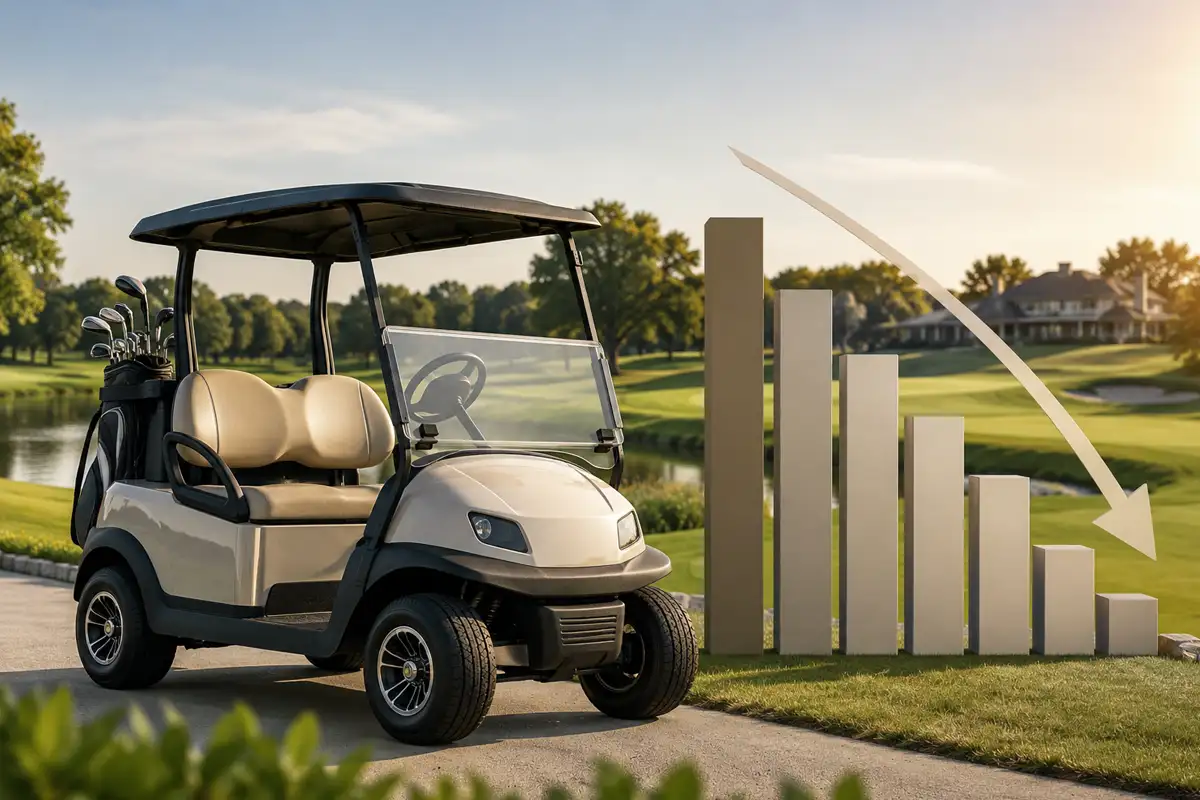
Quick answer: Golf carts lose 20 to 30 percent of their value in the first year and continue depreciating 10 to 15 percent annually through year five, after which the curve flattens. Brand, battery health, condition, and any upgrades matter as much as age. A clean cart with a healthy lithium pack holds significantly more value than the same model with a failing lead acid set. If you are thinking about selling, 303 Cart Barn purchases used carts and offers a trade-in and consignment program at our Littleton, Colorado location.
Whether you are thinking about selling your cart, upgrading to something new, or just curious about what you are sitting on, understanding golf cart depreciation helps you make a smarter decision. Golf carts do not follow the same rules as cars. The resale market is more fragmented, more local, and more dependent on a handful of specific factors that buyers care about deeply. This guide walks through all of them.
How Golf Cart Depreciation Works
Golf carts depreciate fastest in the first few years of ownership and then level off, similar to cars, but with a few important differences. The biggest one: battery condition can reset the depreciation clock in either direction. A six-year-old cart with a brand new lithium pack can command more money than a three-year-old cart with a failing lead acid set that is due for a $600 to $800 replacement. Buyers price in the work they will need to do, so battery health has an outsized effect on what your cart is actually worth.
Here is what a typical depreciation curve looks like for a golf cart that sold new for $10,000:
| Years of Ownership | Approximate Retained Value | Estimated Resale Range |
|---|---|---|
| 1 year | 70 to 80% | $7,000 to $8,000 |
| 2 to 3 years | 55 to 70% | $5,500 to $7,000 |
| 4 to 5 years | 40 to 55% | $4,000 to $5,500 |
| 6 to 8 years | 30 to 45% | $3,000 to $4,500 |
| 9 to 12 years | 20 to 35% | $2,000 to $3,500 |
| 12+ years | 15 to 25% | $1,500 to $2,500 |
These are baseline ranges for a cart in good condition with functional batteries. A cart with a recent lithium upgrade or extensive customization can exceed these ranges. A cart with dead batteries, body damage, or neglected mechanicals will fall below them.
The Five Factors That Determine What Your Cart Is Worth
1. Battery Condition and Type
No single factor affects resale value more than the battery. This is true whether you have a traditional lead acid pack or a lithium upgrade, and it is the first thing a knowledgeable buyer will evaluate.
Lead acid batteries have a lifespan of two to four years under regular use. When a buyer looks at a cart with a four-year-old lead acid pack, they are pricing in the cost of replacing it shortly after purchase. That $600 to $900 replacement cost comes directly out of what they are willing to pay for your cart. If your lead acid pack is at the end of its life, you can expect buyers to discount accordingly or to use battery condition as a negotiating tool.
LiFePO4 lithium packs are a different story. A properly installed lithium battery from a reputable brand lasts eight to twelve years. A buyer looking at a cart with a two-year-old lithium pack understands they have six to ten years of battery life ahead of them at no additional cost. That changes their math entirely. In our experience, carts with documented lithium upgrades sell faster and at prices $1,500 to $3,000 above comparable lead acid carts of the same year and model.
2. Brand and Model
Not all golf cart brands hold value equally. Here is a general tier breakdown based on how brands typically perform in the Colorado resale market:
Strong resale brands: Club Car, Yamaha, and Sierra hold value well due to build quality, parts availability, and buyer familiarity. Club Car in particular has a strong following among buyers who have owned one before and trust the platform.
Solid mid-tier resale: EZ-GO retains value reasonably well, especially on the RXV and newer Freedom RXV platforms. Older TXT models are more price-sensitive because buyers have more options at that price point.
Brand-specific considerations: Newer brands like Epic and Icon have growing resale markets but less historical data. In our observation, Icon and Epic carts retain value well when they are in clean condition, but the buyer pool at resale is slightly smaller than for Club Car or EZ-GO, which can affect time on the market.
3. Age and Generation
Age matters, but generation matters more. A 2012 Club Car Precedent and a 2012 EZ-GO TXT are both 14-year-old carts, but buyers evaluate them differently based on the platform, parts availability, and how the chassis has aged. Generally speaking, carts from the 2015 and newer era have a wider buyer pool and better parts support, which holds resale values more stable than older models from the early 2000s.
For carts older than 2008, the conversation shifts from depreciation to collector or specialty value. Vintage carts, particularly well-restored examples from the 1970s and 1980s, can actually appreciate if restored correctly. That is a niche market and a separate conversation from mainstream resale.
4. Condition: Body, Frame, and Mechanicals
Buyers looking at your cart are doing a quick mental checklist the moment they see it. Faded, cracked, or damaged body panels, a rusted frame, worn seats, and evidence of water intrusion all signal deferred maintenance and push buyers toward lower offers or toward walking away entirely.
The three areas that matter most for first impressions:
Body panels and paint: Sun damage and fading are common in Colorado, where UV exposure at altitude accelerates plastic degradation. Restored or well-maintained body panels signal that the owner took care of the cart overall.
Seat condition: Cracked, torn, or sun-damaged seats are an easy negotiating point for buyers. Reupholstering before selling is often worth the $150 to $300 investment if the rest of the cart is solid.
Tire condition and tread: Worn or mismatched tires signal that the cart has not been maintained. Fresh tires, or at least tires with even wear and adequate tread, show that the cart has been looked after.
5. Modifications and Upgrades
The right modifications can add real value; the wrong ones can subtract from it. Here is how to think about it:
Value-adding upgrades: Lithium battery conversions (especially documented, professionally installed ones), lift kits on appropriate wheel and tire packages, upgraded controllers and motors with documented performance tuning, and LED lighting packages all have broad buyer appeal and tend to recover most or all of their installation cost in resale.
Neutral to negative modifications: Highly personalized paint jobs, custom audio builds, and unusual body kits can appeal to the right buyer but narrow the buyer pool. If the modification is polarizing, it may take longer to sell and may not add dollar-for-dollar value.
Work that does not show: Mechanical work like motor rebuilds, controller replacements, and brake servicing is essential but often invisible to buyers. Document it. A folder with service receipts is worth real money at resale because it turns an invisible investment into tangible proof of care.
Resale Value Ranges by Brand and Year
The following ranges are based on carts in good to excellent condition with functional batteries. Carts with dead lead acid packs should be discounted $600 to $1,200 from these ranges. Carts with recent lithium upgrades may exceed the upper end of these ranges.
Club Car
Club Car DS (2000 to 2008): $1,800 to $4,000. These are durable workhorses that hold up well mechanically but are priced as functional carts rather than premium ones. Good candidates for buyers who need reliable transportation without a premium price tag.
Club Car Precedent (2004 to 2012): $3,000 to $6,500. The Precedent platform has a strong following. Clean examples with solid batteries and good body panels reach the higher end of this range easily.
Club Car Precedent (2013 to 2018): $5,000 to $8,500. More modern electronics and better original condition push these into a strong middle tier of the resale market.
Club Car Onward (2016 and newer): $7,000 to $12,000. The Onward is Club Car’s premium consumer platform and holds value accordingly. Lithium-equipped examples are in strong demand.
EZ-GO
EZ-GO TXT (2000 to 2012): $1,500 to $4,000. The TXT is one of the most common carts in the used market, which keeps prices competitive. Condition and battery health are the primary differentiators.
EZ-GO RXV (2008 to 2016): $3,500 to $6,500. The RXV platform has a more modern chassis and better stock performance than the TXT, which supports higher resale prices.
EZ-GO Freedom RXV (2017 and newer): $6,000 to $10,000. Lithium-ready from the factory, the Freedom RXV has broad buyer appeal and holds value well.
Yamaha
Yamaha Drive (2007 to 2016): $3,000 to $6,500. Yamaha has a devoted buyer base that trusts the brand’s reliability. Drive models hold value consistently, especially with original drivetrains in good shape.
Yamaha Drive2 (2017 and newer): $5,500 to $10,000. The Drive2 is Yamaha’s current consumer platform and has a wide resale audience. Lithium conversions on the Drive2 have become popular and command premium pricing.
What Hurts Your Resale Value More Than Anything Else
Beyond the five core factors, a few specific situations dramatically reduce what a buyer will pay or eliminate buyers entirely:
Dead or failing battery pack: This is the single largest value killer. A cart that cannot complete a full charge cycle is essentially a project to a buyer, not a vehicle. If your lead acid pack is at the end of its life and you are planning to sell, either replace it before listing or price the cart to reflect the immediate replacement cost the buyer will face.
Electrical gremlins with no diagnosis: Intermittent electrical issues that have not been diagnosed and documented are a major red flag. Buyers have no way to know how serious an undocumented electrical problem is, so they assume the worst. If your cart has an electrical issue, get it diagnosed before selling. Even if the repair is expensive, knowing what it is allows you to price the cart honestly and let buyers make an informed decision.
Outdoor storage without a cover: Colorado’s UV exposure is intense, especially at altitude. A cart that has sat uncovered outside for multiple seasons will show it. Faded plastics, cracked seats, and oxidized metal are all visible signals that the cart has been neglected, and buyers price them accordingly.
Non-documented modifications: Wiring changes, battery replacements, and mechanical modifications that have not been documented raise questions. When buyers cannot tell who did the work or when, they treat the modification as a liability rather than an asset.
How to Get the Most Money for Your Cart
If you are preparing to sell, these steps have the most impact on what you will actually receive:
Test and document your battery state of charge and range. If your lead acid pack can complete a full 18-hole equivalent run, say so and demonstrate it. If it cannot, either replace it or price accordingly.
Clean the cart thoroughly. A professional detail on a golf cart is $75 to $150 and routinely adds $500 or more to buyer perception of value. First impressions drive offers.
Gather your paperwork. Service receipts, battery purchase records, upgrade invoices, and the original purchase documentation all add credibility and reduce buyer skepticism.
Price to the market, not to your memories. The price you paid or the improvements you have made over the years are not what set the market price. Current comparable carts in the Colorado market are what matter, and overpricing is the most common mistake sellers make.
Selling Through 303 Cart Barn: Trade-In and Consignment
If you are upgrading to a new cart, the easiest path is to trade your current one in at 303 Cart Barn. We evaluate your cart, give you a trade-in value toward your new purchase, and handle everything from there. It is the most straightforward way to move your cart and apply its value toward something new.
If you are not purchasing a new cart but still want to sell, our consignment program lets you list your cart with us without handling the sale yourself. We have an established buyer audience in the Denver metro and along the Front Range, which means your cart gets in front of more qualified buyers than a private listing typically reaches.
You can submit a trade-in or consignment request here and we will be in touch to discuss your cart and what it is worth in the current market.
We also maintain a current inventory of inspected used golf carts for sale if you are on the buying side and want to see what is available.
A Note on Golf Cart Values in Colorado Specifically
The Colorado market has a few quirks worth knowing. First, the active outdoor season here runs roughly April through October in the Denver metro, which means demand for golf carts peaks in spring and early summer and softens in late fall. Listing your cart in March or April will generally yield better results than listing in October or November.
Second, Colorado buyers are increasingly educated about battery types. The LiFePO4 conversation has moved from niche to mainstream in our market over the last few years. Buyers now ask about battery chemistry and BMS protection routinely, not just whether the batteries are new. If you have a lithium upgrade, it is a selling point worth featuring prominently in any listing.
Third, altitude-related wear is something Colorado buyers check for. Carts that have spent years at high altitude doing steep terrain work have more wear on motors, brakes, and drivetrain components than the same cart would show from flat-terrain use. If your cart has heavy terrain use in its history, be prepared for buyers to scrutinize mechanicals carefully.
Frequently Asked Questions: Golf Cart Depreciation and Resale Value
How much does a golf cart depreciate per year?
Golf carts lose approximately 20 to 30 percent of their value in year one and another 10 to 15 percent per year through year five. After that, depreciation slows significantly. Battery condition has an outsized effect: a cart with a failing lead acid pack depreciates faster, while a recently upgraded lithium pack can partially reset the curve in the other direction.
What is the resale value of an EZ-GO golf cart?
EZ-GO resale values range from roughly $1,500 to $4,000 for older TXT models in good condition, $3,500 to $6,500 for RXV models from 2008 to 2016, and $6,000 to $10,000 for Freedom RXV models from 2017 onward. Battery condition and any lithium upgrades move values within and sometimes above these ranges. The RXV platform is generally more sought after than the TXT at comparable ages.
What is the resale value of a Club Car golf cart?
Club Car is one of the stronger resale brands in the used golf cart market. Older DS and Precedent models from 2000 to 2012 range from $1,800 to $6,500 depending on condition. Newer Precedent models from 2013 to 2018 reach $5,000 to $8,500, and Club Car Onward models from 2016 onward command $7,000 to $12,000 in good condition. Lithium-equipped Onward examples consistently reach the upper end of that range.
Does a lithium battery increase golf cart resale value?
Yes, meaningfully. A professionally installed LiFePO4 lithium pack typically adds $1,500 to $3,000 to resale value compared to the same cart with an aging lead acid set. Buyers factor in the eight to twelve years of battery life ahead of them and price it into their offer. Carts with documented lithium upgrades from reputable installers also tend to sell faster than comparable lead acid carts.
What factors hurt golf cart resale value the most?
The biggest value killers are a dead or failing battery pack, undocumented electrical issues, sun-damaged or cracked body panels, neglected mechanical systems, and a history of outdoor storage without cover. In Colorado specifically, evidence of uncovered UV exposure over multiple seasons is immediately apparent to buyers and is regularly used as a negotiating point to reduce the price.
Does 303 Cart Barn buy used golf carts or offer consignment?
Yes. 303 Cart Barn purchases used carts outright through our trade-in program, and we also offer consignment for owners who want to sell without managing the transaction themselves. Both options give you access to our established buyer network in the Denver metro area. You can submit a trade-in or consignment request on our website, and our team will evaluate your cart and walk you through your options.