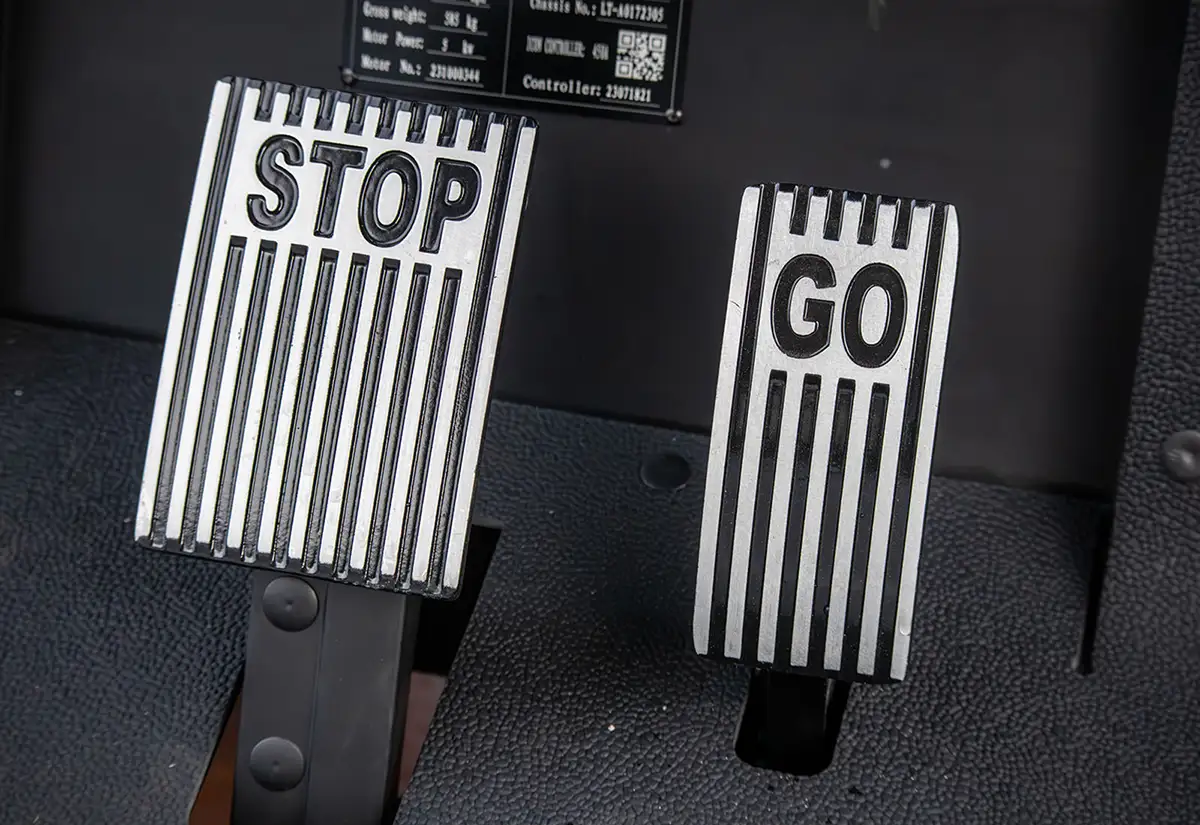
Colorado is not a flat state, and that matters more than most people realize when they start thinking about speed upgrades. A cart that runs fine at 15 mph on a flat golf course can feel completely underpowered on a 6% grade hill in a Denver suburb. The speed problem and the hill problem are often the same problem, and they have the same solution: better power delivery.
This guide ranks the upgrades that actually produce results in real-world conditions, explains what each one does and what it costs, and is honest about the options that sound good but do not deliver. We also cover the point at which upgrading an older cart stops making financial sense compared to buying something new.
If you want to see what a modern factory-built fast cart looks like before going down the upgrade path, the fastest golf carts available in Colorado right now gives you a baseline to compare against.
Upgrade 1: Motor Swap — The Biggest Speed Gain Per Dollar
Replacing the stock motor with a high-output aftermarket unit is the single most impactful speed upgrade you can make to an older electric golf cart. Stock motors on most older Club Cars, EZGOs, and Yamahas are engineered for low speed, low demand golf course use. A high-output motor from a reputable supplier like Plum Quick or D&D Motor Systems produces more torque at higher RPMs, which translates directly into a higher top speed and dramatically better hill performance.
The catch is that a motor upgrade works best when paired with a matching controller. The controller is the brain of an electric cart’s drivetrain, and a stock controller will limit what a high-output motor can do. Installing a new motor without upgrading the controller is like putting a performance engine in a car with a restricted throttle body. You will see some improvement but not nearly what the motor is capable of delivering.
Expect to spend $800 to $2,500 for a motor and controller package installed by a professional shop. The range depends on the cart platform, the output level you are targeting, and whether any additional wiring work is required.
Upgrade 2: Lithium Battery Conversion — The Colorado Must-Have
A lithium conversion will not dramatically increase your cart’s top speed the way a motor swap does. What it will do is eliminate voltage sag, and in Colorado that matters enormously. Lead-acid batteries lose voltage as they discharge, which means a cart that goes 18 mph with a full charge might only manage 12 mph on a hill with a half-depleted pack. That inconsistency is not a minor inconvenience in a state where flat terrain is not guaranteed.
Lithium LiFePO4 batteries maintain consistent voltage output across most of their usable charge cycle. That means your top speed is your top speed whether the battery is at 90% or 30%. The cart performs the same from first trip to last. Charging is also faster, the overall lifespan is 3 to 5 times longer than lead-acid, and the weight reduction improves handling and reduces wear on other drivetrain components.
A lithium conversion on a standard 48V golf cart typically runs $1,200 to $2,500 installed depending on the pack size and brand. For a deeper look at what a voltage upgrade specifically delivers, our guide on upgrading from 48V to 72V covers the full picture on what that jump in voltage does to performance and what it costs.
Upgrade 3: Controller Reprogramming — Cheap if You Just Need to Unlock the Governor
Many modern electric golf carts have programmable controllers that are set conservatively from the factory. A dealer can often reprogram the controller’s speed settings and current limits without replacing any hardware. This is sometimes referred to as governor removal, though on modern carts it is more precisely described as adjusting the controller’s operational parameters.
On carts where the stock controller is limiting a capable motor, this is an inexpensive way to recover performance that is already there but being held back. On older carts where the motor genuinely cannot produce more output, reprogramming will produce little to no visible improvement. Cost ranges from $50 to $300 at a professional shop depending on the cart brand and controller model.
Upgrade 4: Gear Ratio Change — Be Careful With This One
Changing the gear ratio in a golf cart’s differential or motor drive can increase top speed, but it does so by sacrificing torque. A higher speed ratio means less pulling power at lower speeds, which is the opposite of what most Colorado cart owners actually want. If you primarily drive flat, private property terrain and rarely deal with grades, a gear ratio change may be worth considering. If your neighborhood has any elevation change at all, you will likely regret trading torque for top speed.
The exception is when a gear ratio change is paired with a high-output motor that can compensate for the torque reduction. In that configuration, the motor provides the pulling power and the ratio change unlocks the higher RPM ceiling. This is a combination upgrade rather than a standalone fix.
What About Tire Size Changes?
Larger tires do not make a golf cart faster in any meaningful sense. What they do is change the cart’s effective gearing slightly and affect how accurate the speedometer reads. A taller tire covers more ground per wheel rotation, which means a cart’s measured speed may read slightly differently with larger tires installed. The motor output and controller settings have not changed, however, so actual power delivery is unchanged.
Larger tires do improve ride quality, ground clearance, and off-road capability, and there are plenty of good reasons to run them. Speed improvement just is not one of them. If you are interested in tire upgrades for comfort, handling, or terrain capability, our top golf cart upgrades guide covers tires alongside lift kits, lighting, and other popular modifications in detail.
When It Makes More Sense to Buy New
Here is the honest calculation: a complete performance build on an older electric cart including a new motor, matched controller, and lithium battery conversion can easily run $3,000 to $5,000 installed. At that price point, you still have an older cart with an older frame, older brake hardware, and no warranty on any of it.
A new street-legal LSV like the Epic E40FX arrives at 25 mph from the factory with a 5kW AC motor, lithium battery, DOT-compliant lighting, seat belts, a backup camera, and a full manufacturer warranty. The total cost of ownership comparison often favors the new cart, especially when you factor in the value of a warranty and the reliability of factory engineering.
If your cart has sentimental value, a premium custom build you want to preserve, or a platform that holds up well to modification (older Club Car Precedent bodies are popular candidates), then a performance build makes real sense. Otherwise, a new cart from our street legal inventory with financing available is often the more rational decision.
Professional Installation at 303 Cart Barn
Our service department in Littleton handles motor installations, controller upgrades, lithium conversions, and performance tuning for all major cart platforms. Schedule a service appointment or call 303-440-8400 to talk through what your specific cart needs to reach your speed goals.
Frequently Asked Questions
What is the best way to make a golf cart faster?
The most effective approach is combining a high-output motor with an upgraded controller calibrated to match it, plus a lithium battery conversion to eliminate voltage sag. Together these three upgrades can take a stock cart from 12 to 15 mph up to 25 mph or more depending on the base platform.
How much does it cost to upgrade a golf cart’s speed?
A basic controller reprogramming runs $50 to $300. A motor and controller upgrade costs $800 to $2,500 installed. A lithium battery conversion adds $1,200 to $2,500. A complete performance build covering all three can run $3,000 to $5,000 installed at a professional shop.
Will making my golf cart faster void the warranty?
In most cases yes. Performance modifications including motor swaps, controller reprogramming, and governor removal typically void the manufacturer’s warranty. Consult with your dealer before modifying a cart that is still under warranty.
Can I make a street legal golf cart faster without losing its LSV status?
Modifying a street-legal Low Speed Vehicle to exceed 25 mph removes it from the LSV classification under federal standards. If your cart is registered as an LSV in Colorado, keeping it within the 20 to 25 mph range is required to maintain street-legal status.
Does a lithium battery make a golf cart faster?
A lithium battery does not directly increase top speed the way a motor upgrade does. What it does is eliminate voltage sag so the cart maintains consistent speed throughout the charge cycle and performs better on inclines. In Colorado, where grades are common, lithium significantly improves real-world performance over lead-acid.
Is it better to upgrade an old cart or buy a new fast golf cart?
For most buyers, a new modern electric cart with a factory AC motor and lithium battery is better value than spending $3,000 to $5,000 upgrading an older cart. New street-legal models like the Epic E40FX, Icon i60LX, and Evolution D5 series arrive at 25 mph with full warranties and DOT compliance. Upgrades make more sense when the base cart has sentimental value or a significant custom build worth preserving.