Upgrading to lithium power has become one of the most talked-about improvements in the golf cart world. If you’re researching a smarter alternative to traditional lead-acid batteries, you’re likely comparing performance, lifespan, and long-term value. Whether you’re exploring a routine golf cart battery replacement or considering a full golf cart battery upgrade, understanding your options can help you avoid costly mistakes.
This guide is designed to complement existing service information and help you determine whether lithium technology is the right choice for your cart.
Understanding Your Current Battery System
Most electric golf carts operate on:
- 36-volt systems
- 48-volt systems
- 72-volt systems
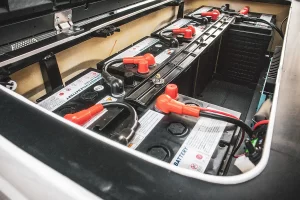
If your cart currently uses multiple 6V or 8V batteries connected in series, those batteries combine to create your total system voltage. The number of batteries doesn’t matter as much as the total voltage output.
For example:
- Six 8V batteries = 48V
- Eight 6V batteries = 48V
That means a properly rated 48V lithium battery can often replace the entire pack.
Before moving forward, always confirm your cart’s required voltage and controller compatibility.
Why Lithium Is Gaining Popularity
Lithium batteries—specifically LiFePO4 (Lithium Iron Phosphate)—offer several practical advantages.
Longer Lifespan
Traditional lead-acid batteries typically last 3 to 5 years. Lithium batteries often last 8 to 12 years with proper care.
Lighter Weight
Lead-acid battery packs can weigh 300–400 pounds. Lithium batteries are significantly lighter, reducing strain on the suspension and motor.
Maintenance-Free Operation
With lithium, you eliminate:
- Watering
- Corrosion cleanup
- Acid leakage concerns
Consistent Power Output
Lithium batteries maintain steady voltage during discharge. That means your cart won’t gradually lose power as the charge drops.
Is One Lithium Battery Enough?
In most standard applications, yes.
If your cart runs on a 48-volt system, a single 48V lithium battery is typically sufficient. The key factor then becomes amp-hour (Ah) capacity.
Higher amp-hours provide greater range. For example:
- 60Ah = Moderate usage
- 100Ah = Extended range and heavier accessory loads
If you use your cart frequently, drive long distances, or run additional electronics, you may want a higher-capacity battery.
In some cases, two lithium batteries are installed in parallel to increase range—not voltage.
Understanding a Golf Cart Lithium Battery Conversion
A proper golf cart lithium battery conversion involves more than simply swapping batteries. It usually includes:
- Lithium battery pack
- Compatible lithium charger
- Mounting hardware
- Updated wiring as needed
- Optional voltage reducer for 12V accessories
You can learn more about professional golf cart lithium battery conversion services here:
https://303cartbarn.com/golf-carts-with-lithium-batteries/
It’s important to note that lithium batteries require a compatible charger. Using a standard lead-acid charger can damage the battery.
When to Choose Lithium Over Lead-Acid
A lithium solution may make sense if:
- You want lower long-term maintenance
- You plan to keep your cart for many years
- You want reduced weight and improved efficiency
- You’re tired of corrosion and battery watering
However, if you’re simply looking for a straightforward golf cart battery replacement, replacing your existing lead-acid pack may still be a practical option depending on budget and usage needs.
Cost Comparison
| Option | Initial Cost | Lifespan | Maintenance |
|---|---|---|---|
| Lead-Acid Replacement | Lower upfront | 3–5 years | Regular watering & cleaning |
| Lithium Upgrade | Higher upfront | 8–12 years | Minimal maintenance |
While lithium requires a larger initial investment, many owners find that the reduced maintenance and longer lifespan offset the cost over time.
Installation Considerations
Before upgrading, consider the following:
Charger Compatibility
Lithium batteries require a lithium-specific charger with the correct charging profile.
Onboard Systems
Some carts include onboard charging systems that may need adjustment or bypassing during conversion.
Accessories
If your cart runs headlights, sound systems, or other 12V components, a voltage reducer may be necessary.
For safety and proper system configuration, many owners choose professional installation during a golf cart battery upgrade.
Performance Expectations
A properly sized lithium battery typically provides:
- Consistent acceleration
- Steady torque
- Reliable range per charge
Because lithium batteries do not gradually lose voltage during discharge, performance feels more stable compared to lead-acid systems.
Range depends on:
- Battery capacity (Ah)
- Terrain
- Cart weight
- Driving style
Safety and Reliability
LiFePO4 lithium batteries include built-in Battery Management Systems (BMS) that protect against:
- Overcharging
- Over-discharging
- Short circuits
- Overheating
This chemistry is widely used in marine, solar, and recreational vehicle applications because of its stability and safety profile.
Frequently Asked Questions (FAQs)
Yes, as long as the lithium battery matches your cart’s total system voltage.
Lithium offers longer lifespan and lower maintenance, while lead-acid has a lower upfront cost.
Yes. Lithium batteries require a compatible lithium charger.
Most LiFePO4 batteries last 8–12 years depending on usage and charging habits.
While some installations are straightforward, professional service ensures compatibility and system safety.
If budget is the primary concern or you plan short-term ownership, replacing with lead-acid may be practical.