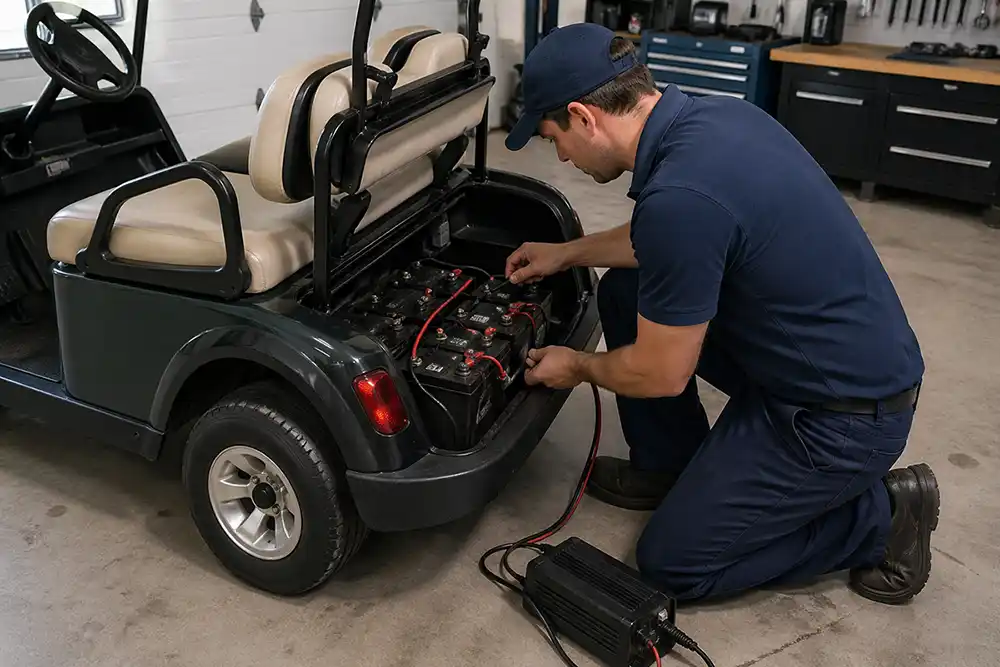
If your golf cart is not charging, it can feel like everything just stopped working overnight. You plug it in, expect it to be ready later, and nothing happens.
No lights, charging sound, or progress.
The good news is that most charging issues are not as complicated as they seem. In many cases, the problem comes down to something simple that can be identified pretty quickly if you know what to look for.
This guide walks you through the most common reasons your golf cart is not charging and what you should check before assuming the worst.
Start With the Obvious Before You Assume the Worst
Before diving into deeper issues, start with the basics.
Make sure the outlet you are using actually has power. It sounds simple, but this gets overlooked all the time. Try plugging in another device to confirm it is working.
Check that your charger is fully plugged in and that the connection to the cart is secure. Loose or partial connections can prevent charging completely.
If your charger has indicator lights, take a look at what they are doing. No lights at all usually points to a power issue, while blinking or error lights can signal a deeper problem.
Starting here saves time and avoids unnecessary stress.
A Faulty Charger Is More Common Than You Think
If everything looks fine on the surface but your cart still is not charging, the charger itself could be the issue.
Chargers wear out over time, especially if they are used frequently or exposed to temperature changes. Internal components can fail without any obvious signs.
One of the easiest ways to test this is to try a different charger if you have access to one. If your cart starts charging with a different unit, you have your answer.
If you do not have another charger available, look for signs like no fan noise, no indicator lights, or inconsistent behavior when plugged in.
A failing charger often shows symptoms before it completely stops working.
Battery Health Can Stop Charging Completely
Your batteries play a bigger role in charging than most people realize.
If your batteries are too weak or too depleted, the charger may not even recognize them. This can make it seem like the charger is not working when the real issue is battery condition.
Older lead acid batteries are especially prone to this. Over time, they lose their ability to hold voltage, and once they drop below a certain level, charging becomes difficult or impossible.
If your cart has been sitting unused for a long period, this becomes even more likely.
This is also where Colorado conditions come into play. Temperature swings and elevation can impact battery performance more than people expect. If you want a deeper look at how this affects your cart, check out this guide:
https://303cartbarn.com/how-colorado-altitude-affects-golf-cart-performance/
Check Battery Connections and Cables
Loose or corroded connections are a very common cause of charging problems.
Take a look at your battery terminals. If you see corrosion, buildup, or loose cables, that can interrupt the charging process.
Corrosion creates resistance, which limits the flow of electricity. Even a small amount can cause issues.
Cleaning the terminals and tightening connections can often restore proper charging. Just make sure the cart is powered off before doing any work.
If cables look damaged or worn, they may need to be replaced.
The Onboard Computer May Be Blocking the Charge
Many modern golf carts have onboard systems that control charging.
If the system detects a problem, it may prevent the charger from activating as a safety measure. This can happen if there is an issue with the batteries, wiring, or other components.
Sometimes resetting the system can help. This can be as simple as disconnecting the batteries briefly and reconnecting them.
If the issue continues, the onboard controller may need to be inspected by a professional.
Charging Port Issues Are Easy to Miss
The charging port on your cart is another common failure point.
If the pins inside the port are bent, dirty, or damaged, the charger may not connect properly. This can stop charging completely or cause it to start and stop unexpectedly.
Take a close look at the port and make sure everything looks clean and aligned.
If you notice physical damage, the port may need to be repaired or replaced.
Extreme Temperatures Can Affect Charging
Colorado weather can impact charging more than people expect.
Cold temperatures can slow down or even prevent charging, especially with certain battery types. In some cases, the charger may not activate at all if the batteries are too cold.
Heat can also affect performance, although it is less likely to stop charging completely.
If your cart is stored in a garage or outside, temperature could be part of the issue. Allowing the batteries to warm up slightly before charging can sometimes resolve the problem.
When Charging Issues Turn Into Performance Problems
If your cart does charge but does not seem to hold power, the issue may be bigger than charging alone.
Weak batteries, voltage drops, or system limitations can affect both charging and performance.
For example, many owners notice charging issues around the same time the cart starts losing power on hills. These problems are often connected.
When It Is Time to Replace Batteries or Upgrade
At a certain point, troubleshooting only goes so far.
If your batteries are several years old and showing signs of failure, battery replacement service may be the most practical solution.
Many owners are now switching to lithium batteries because they offer more consistent performance, faster charging, and longer lifespan.
If you rely on your cart regularly or deal with hills and longer distances, upgrading your battery system can solve multiple issues at once.
When You Should Call for Service
If you have checked the basics and your cart still is not charging, it may be time for professional help.
Electrical issues can be difficult to diagnose without proper tools. A technician can test your charger, batteries, and system components to pinpoint the problem quickly.
This is especially important if your cart suddenly stopped charging without any clear reason.
Catching the issue early can prevent further damage and save you money in the long run.
Final Thoughts
A golf cart not charging can feel like a major problem, but in many cases, the fix is straightforward.
Start with the basics, check your charger and connections, and take a close look at your batteries.
Most issues come down to wear, environmental factors, or small electrical problems that can be addressed with the right approach.
With a little troubleshooting, you can usually get your cart back up and running without too much trouble.
FAQs
Why is my golf cart not charging at all when I plug it in?
If your golf cart is not charging at all, the most common causes are a lack of power at the outlet, a faulty charger, or batteries that are too weak for the charger to detect. Start by checking the outlet with another device, then inspect your charger for lights or activity. If everything appears normal but nothing happens, your batteries may be too depleted or your charger may have failed.
How do I know if my golf cart charger is bad?
A bad charger often shows no lights, makes no sound, or behaves inconsistently when plugged in. If you can, try using a different charger to see if your cart begins charging. If it does, your original charger is likely the issue. Chargers can fail over time, especially with frequent use or exposure to temperature changes.
Can dead batteries prevent a golf cart from charging?
Yes, completely drained or heavily degraded batteries can prevent a charger from activating. Many chargers require a minimum voltage to start the charging process. If your batteries have dropped below that threshold, the charger may not recognize them at all, making it seem like nothing is happening.
Why does my golf cart charger click but not charge?
A clicking sound usually means the charger is attempting to start but cannot complete the process. This is often caused by low battery voltage, poor connections, or internal charger issues. Checking battery voltage and ensuring all connections are clean and tight can help identify the problem.
Does cold weather affect golf cart charging?
Yes, cold temperatures can slow down or stop charging, especially with certain battery types. Batteries become less efficient in cold conditions, and some chargers will not activate if the battery temperature is too low. Allowing the batteries to warm up can sometimes resolve the issue.
How often should I replace my golf cart batteries?
Lead acid batteries typically last a few years depending on usage and maintenance, while lithium batteries can last significantly longer. If you notice reduced performance, longer charging times, or failure to hold a charge, it may be time for a replacement.
Can I fix a golf cart that will not charge on my own?
In many cases, yes. Simple issues like loose connections, dirty terminals, or outlet problems can be fixed without professional help. However, if the issue involves internal components or electrical systems, it is best to have a technician inspect it.