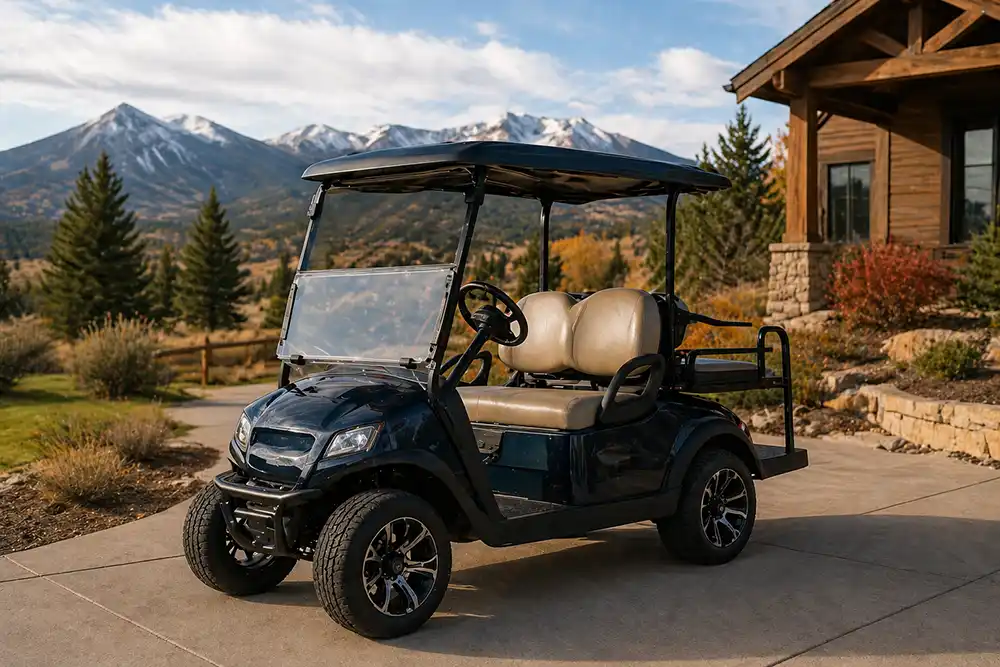
Buying a golf cart is only part of the equation. What really matters for most buyers is the total cost of ownership over time.
In Colorado, that cost can vary more than people expect. Terrain, weather, elevation, and how you plan to use your cart all play a role in long term expenses.
If you are considering a golf cart for neighborhoods, property use, or daily driving, understanding these costs upfront helps you make a smarter decision and avoid surprises later.
This guide breaks down the real cost of owning a golf cart in Colorado so you know exactly what to expect.
The Initial Purchase Price
The first cost is the most obvious one. Golf carts in Colorado can range widely depending on whether you are buying new, pre owned, or fully customized.
Entry level used carts are typically the most affordable option, while new models with upgraded features, lithium batteries, and street legal capabilities sit at the higher end.
Your choice here often depends on how you plan to use the cart. Casual neighborhood driving may not require as many upgrades, while daily use or hilly terrain may justify a higher upfront investment.
Many buyers also explore financing options to spread out the cost, especially when purchasing newer models with advanced features.
Battery Costs and Replacement
Battery cost is one of the most important long term factors.
Traditional lead acid batteries are less expensive upfront, but they require more maintenance and generally need to be replaced more often. Over time, that can add up.
Lithium batteries have a higher initial cost but offer longer lifespan, consistent performance, and lower maintenance. In Colorado, where elevation and terrain demand more from your cart, lithium often becomes the more cost effective option in the long run.
Battery replacement is not just about cost. It directly affects how your cart performs, especially on hills and longer drives.
If you want a deeper understanding of how Colorado conditions impact battery performance, you can read more here:
https://303cartbarn.com/how-colorado-altitude-affects-golf-cart-performance/
Charging and Electricity Costs
Charging a golf cart is relatively inexpensive compared to fueling a vehicle, but it is still part of the ownership equation.
Most electric golf carts cost only a small amount per charge, depending on your local electricity rates and how often you use the cart.
Frequent use, longer drives, and higher capacity battery systems will increase overall electricity usage, but for most owners, this remains one of the lowest ongoing costs.
Routine Maintenance and Service
Like any vehicle, golf carts require regular maintenance to stay in good condition.
This includes checking brakes, replacing tires, maintaining batteries, and ensuring electrical components are functioning properly.
Routine service costs are generally manageable, but they can increase if maintenance is delayed or ignored. Staying ahead of small issues helps prevent larger, more expensive repairs down the line.
In Colorado, weather conditions can also influence maintenance needs. Cold winters and temperature swings can impact battery health and overall performance, making regular service even more important.
Repairs and Unexpected Costs
Even with proper maintenance, occasional repairs are part of ownership.
Electrical issues, worn components, or performance problems can arise over time. The cost of these repairs depends on the type of cart, how often it is used, and the conditions it operates in.
One of the most common performance related issues owners experience is a loss of power on hills. If you have noticed this, it is worth reviewing this our guide on fixing a golf cart’s loss of power on hills.
Planning for occasional repairs ensures you are not caught off guard when something needs attention.
Insurance and Registration Costs
If your golf cart is street legal or used on public roads, insurance may be required or strongly recommended.
Insurance costs vary depending on coverage, usage, and the value of your cart. For many owners, the cost is relatively low compared to traditional vehicles.
Registration requirements can also apply depending on how and where you drive your cart in Colorado. These costs are usually minimal but should still be factored into your overall budget.
Upgrades and Customization
Many golf cart owners choose to upgrade their carts over time.
Popular upgrades include lift kits, larger tires, upgraded seats, lighting, and performance enhancements. While these improvements can enhance comfort and usability, they also add to the total cost of ownership.
It is important to consider how upgrades impact performance as well. Larger tires and added weight can increase strain on your system, especially on hills, which may lead to additional upgrades to maintain performance.
Planning upgrades strategically helps you avoid unnecessary expenses and ensures your cart remains balanced and efficient.
Storage and Seasonal Considerations
Colorado weather adds another layer to ownership costs.
Cold winters can affect battery performance and overall reliability. Proper storage during colder months helps protect your investment and reduce long term wear.
Indoor storage is ideal, but if that is not an option, protective covers and proper winter preparation can help minimize exposure to the elements.
Seasonal care is not just about protection. It also helps maintain performance and avoid costly repairs when you start using your cart again in warmer months.
Depreciation and Resale Value
Like most vehicles, golf carts experience depreciation over time.
However, well maintained carts with strong battery systems and desirable features tend to hold their value better. Lithium equipped carts and models designed for higher performance often remain more attractive on the resale market.
If you plan to upgrade in the future, maintaining your cart properly can help you recover a portion of your investment.
What Does It Really Cost Over Time
When you combine purchase price, battery replacement, maintenance, and occasional upgrades, the total cost of ownership becomes clearer.
For many owners, golf carts remain a cost effective alternative to larger vehicles for short distance travel, neighborhood use, and recreational purposes.
The key is understanding where your money goes and making decisions that align with how you plan to use your cart.
Final Thoughts
Owning a golf cart in Colorado comes with a range of costs, but most of them are predictable and manageable with the right approach.
Battery choice, maintenance habits, and how you use your cart all play a major role in long term expenses.
By understanding these factors upfront, you can make a more informed decision and choose a setup that fits both your needs and your budget.
A well maintained golf cart can provide years of reliable use while keeping operating costs relatively low compared to traditional vehicles.
FAQs
How much does it cost to own a golf cart in Colorado?
The total cost varies depending on the type of cart, battery system, and usage. Most costs come from the initial purchase, battery replacement, maintenance, and occasional repairs.
Are golf carts expensive to maintain?
Maintenance costs are generally low compared to traditional vehicles, especially with regular upkeep and proper care.
Do lithium batteries save money over time?
Yes, lithium batteries typically last longer and require less maintenance, making them more cost effective over time despite a higher upfront cost.
Is insurance required for a golf cart in Colorado?
Insurance may be required or recommended if your cart is street legal or used on public roads.
What is the biggest ongoing cost of owning a golf cart?
Battery replacement is usually the most significant long term cost, especially for carts using traditional lead acid batteries.